
InsurePay – Workers’ Comp Audit Portal
Designing a guided digital workflow for a complex workers’ compensation premium audit
Overview
I designed a new white-labeled audit data-collection experience for InsurePay Pulse, translating a complicated, document-heavy premium audit into a guided workflow that policyholders could understand and complete with confidence. The platform helps insurance carriers obtain the payroll data they need in whatever format is available, then parse and analyze it while collecting the additional information required for a complete audit. The portal could adapt to each carrier’s brand and audit program.
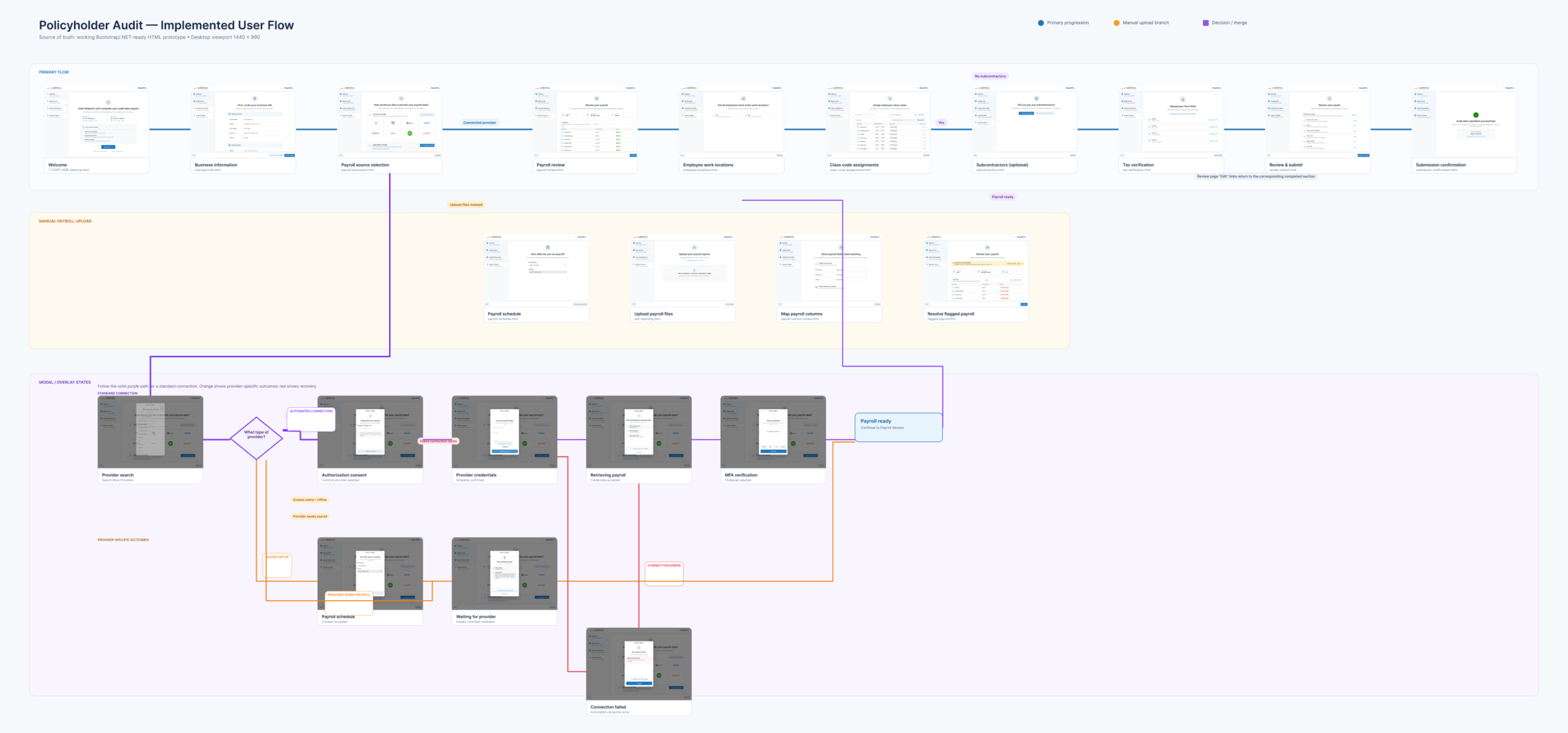
The portal brings business verification, payroll collection, supporting documents, employee classification, issue resolution, and final submission into one connected experience. My role began with understanding the workers’ compensation audit process, translating operational and technical needs into product requirements, and mapping the user flows that would connect each stage. I also led the user experience, interface design, workflow architecture, interaction patterns, responsive considerations, and developer handoff.
The Challenge
Workers’ compensation audits ask policyholders to provide information that can be both detailed and unfamiliar. Business details may have changed during the policy term. Payroll can arrive from a connected provider, a spreadsheet, or manually entered records. Employees may work across multiple locations or class codes, and incomplete data must be corrected before the audit can move forward.
The challenge was not simply to digitize a form. Payroll connectivity added another layer of complexity: InsurePay had direct integrations with only some providers, while other payroll sources required guided setup, credential-based connections, provider-assisted handoffs, or file upload. The experience therefore needed to accommodate different technical paths, waiting and verification states, and connection failures while also turning inconsistent source data into structured, usable payroll records. That processing complexity had to remain largely invisible to the policyholder so the audit did not feel fragmented. At the same time, it had to make a multi-step compliance process feel manageable while preserving the accuracy and completeness auditors require.
Creating a Clear Path Through the Audit
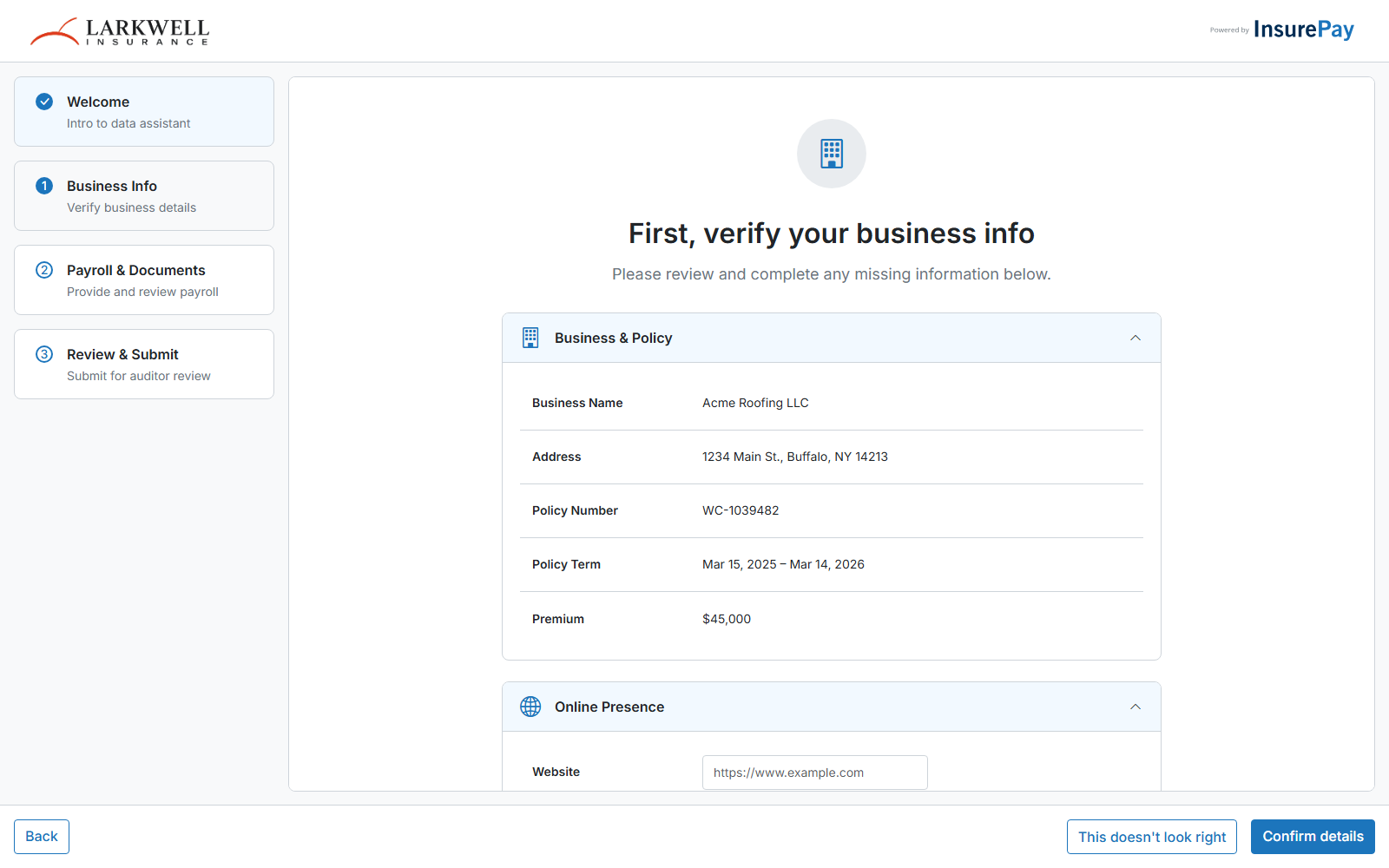
I organized the experience around three understandable stages: verify business information, provide payroll and documents, and review and submit. A persistent stepper makes progress visible, while each screen focuses on one decision or task at a time.
The welcome screen establishes expectations before asking the user to do any work. It confirms the business and policy context, explains what information will be needed, and gives a realistic sense of the effort involved. This creates a calmer entry point and helps users arrive prepared.
Supporting Different Payroll Paths
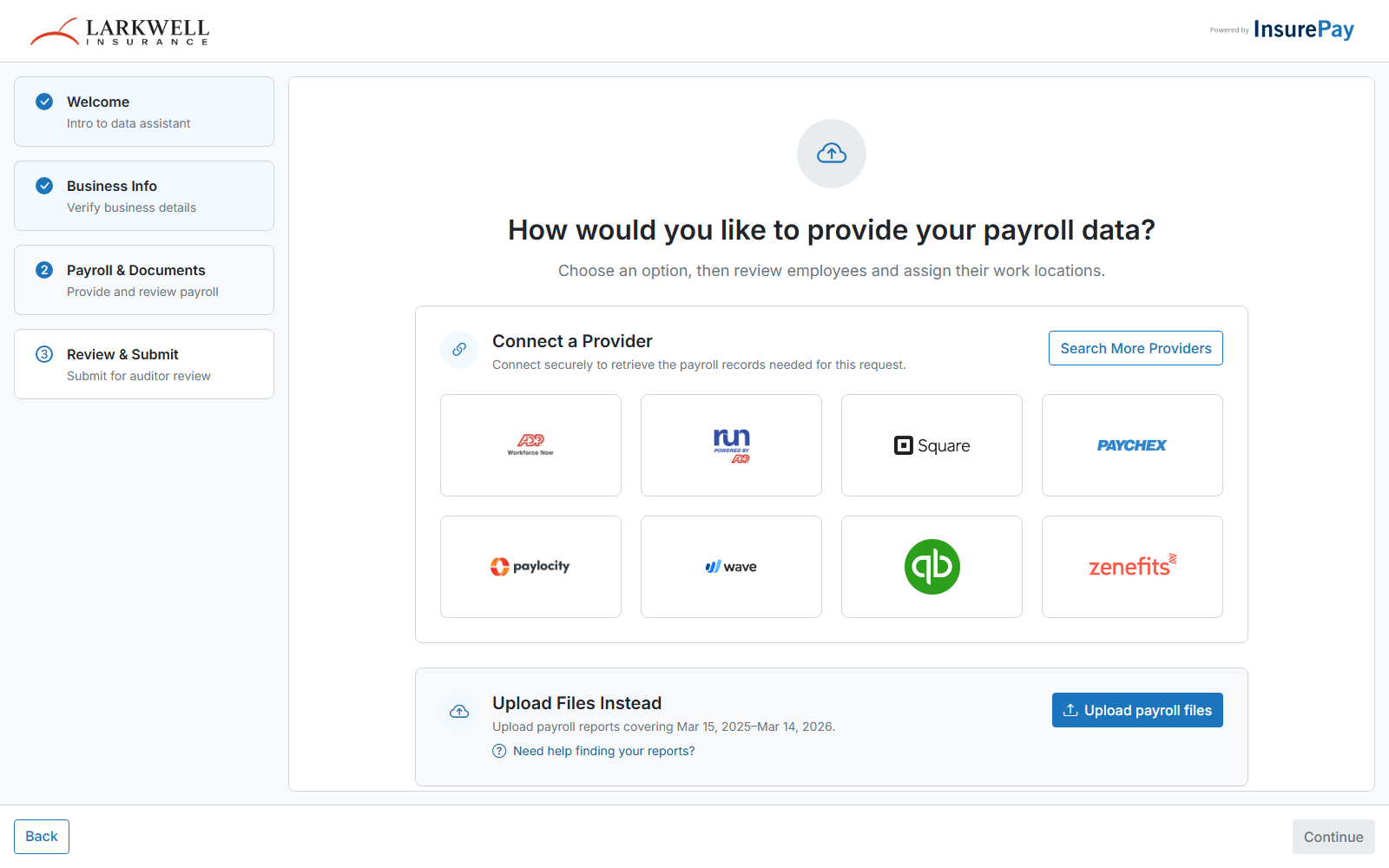
Policyholders do not all arrive with payroll in the same format, so the portal offers clear paths for connected payroll, self-reporting, and document upload. Each option explains what it does and what the user should expect next.
Rather than exposing every possible control at once, the workflow progressively reveals the information needed for the selected path. This keeps the interface approachable for smaller businesses without limiting more complex audit scenarios.
Designing for Error Recovery
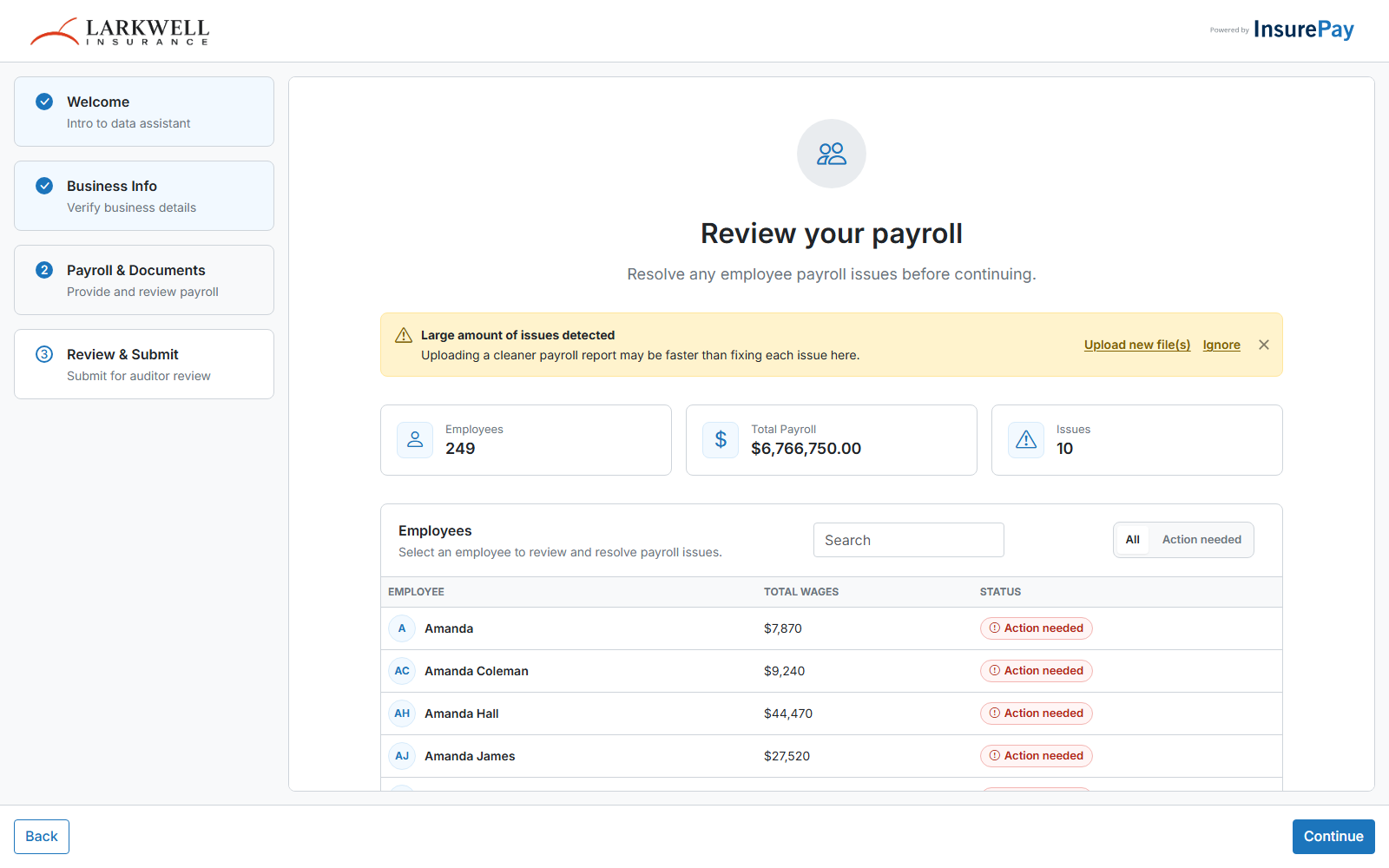
Payroll issues are inevitable, so correction could not feel like a dead end. I designed a focused review workspace that identifies the record requiring attention, explains the issue in plain language, and keeps the relevant action close to the data.
The pattern turns validation into a guided resolution step. Users can understand what is wrong, make the correction, and immediately see how much work remains instead of being sent back through the entire process.
Handling Complex Employee Assignments
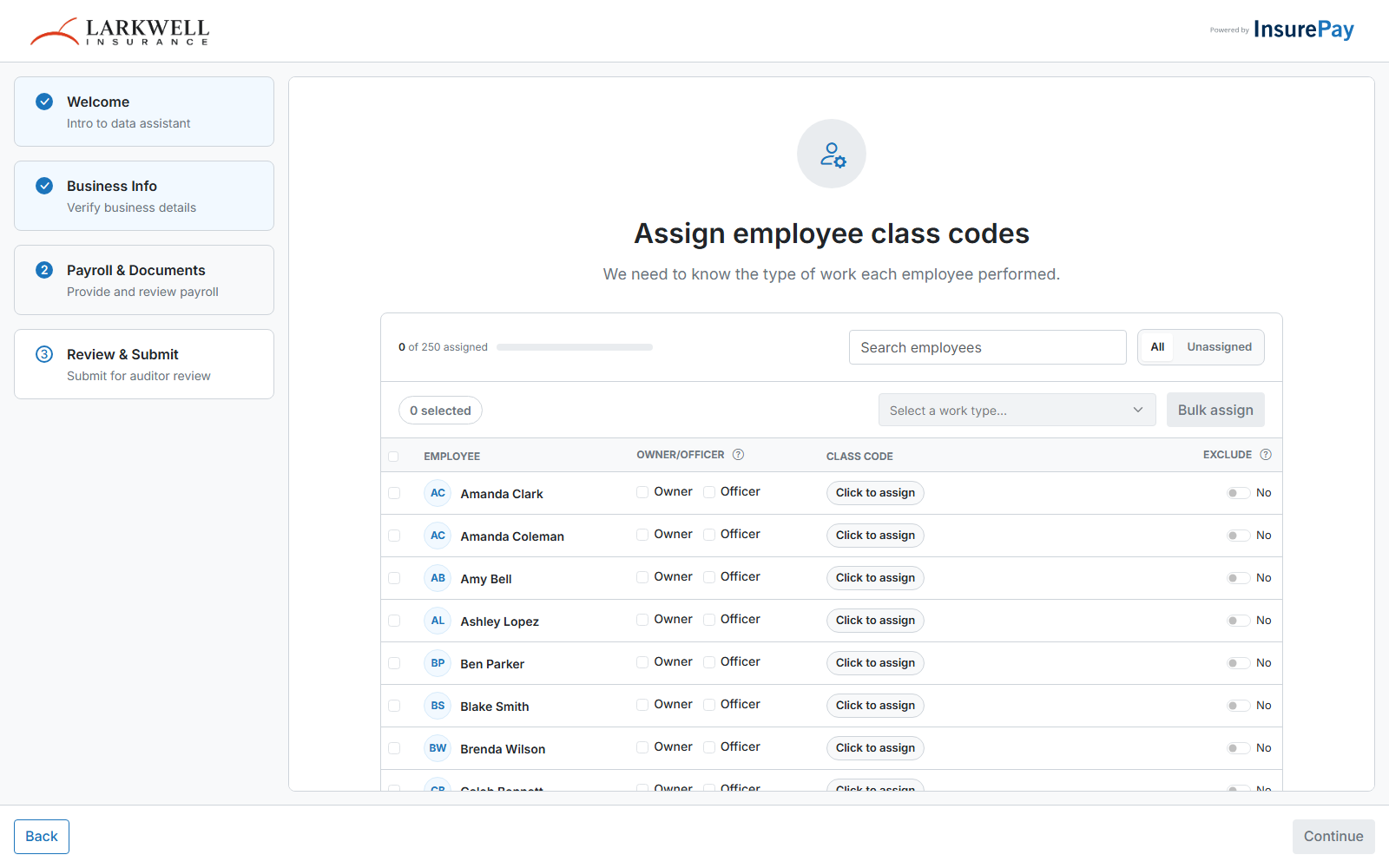
Employee classification introduced one of the most demanding interactions in the portal. An employee may need one location and class code, a bulk assignment shared with other employees, or a split allocation across multiple classifications.
I designed the interface to support these cases within one consistent mental model. Common actions stay fast, while advanced controls appear only when needed. Clear labels, summaries, validation, and completion states help users manage detailed payroll decisions without losing their place.
Review and Submission
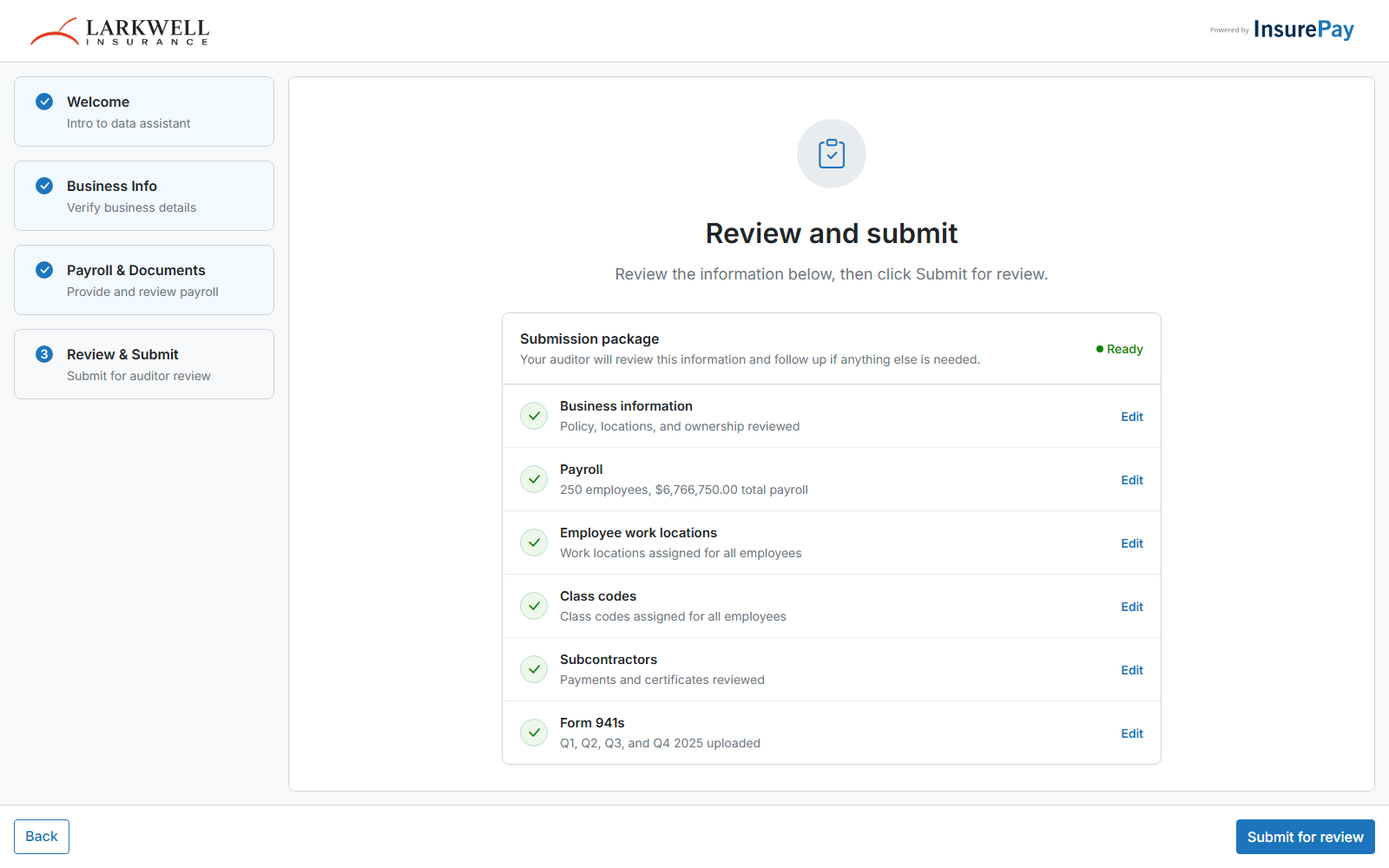
The final review brings the audit back into a single, understandable summary. Users can confirm that each section is complete, return directly to anything that needs attention, and submit knowing what information will be sent for auditor review.
This final checkpoint supports both confidence and data quality: completion is visible, unresolved work is actionable, and submission feels like the natural end of the workflow rather than an abrupt handoff.
Visual System and Developer Handoff
I extended the InsurePay visual language into a practical product system built around accessible typography, restrained color, clear status treatment, reusable cards, structured tables, and familiar form controls. The interface was designed to feel professional and trustworthy without making the audit process feel overly institutional.
To make the design actionable for engineering, I translated the key screens into a responsive HTML and Bootstrap handoff. The package documented reusable design tokens, components, interaction states, validation behavior, and the end-to-end flow, giving developers a concrete reference while preserving the application’s existing technology and business logic.
Outcome
The result is a cohesive, development-ready vision for a modern premium audit experience. It replaces a fragmented collection process with a guided journey that helps policyholders understand what is required, choose the right way to provide information, resolve problems in context, and submit a more complete audit package.
The architecture also creates a reusable foundation for future carrier configurations and audit requirements without changing the core experience users learn.
Date
September 4, 2026